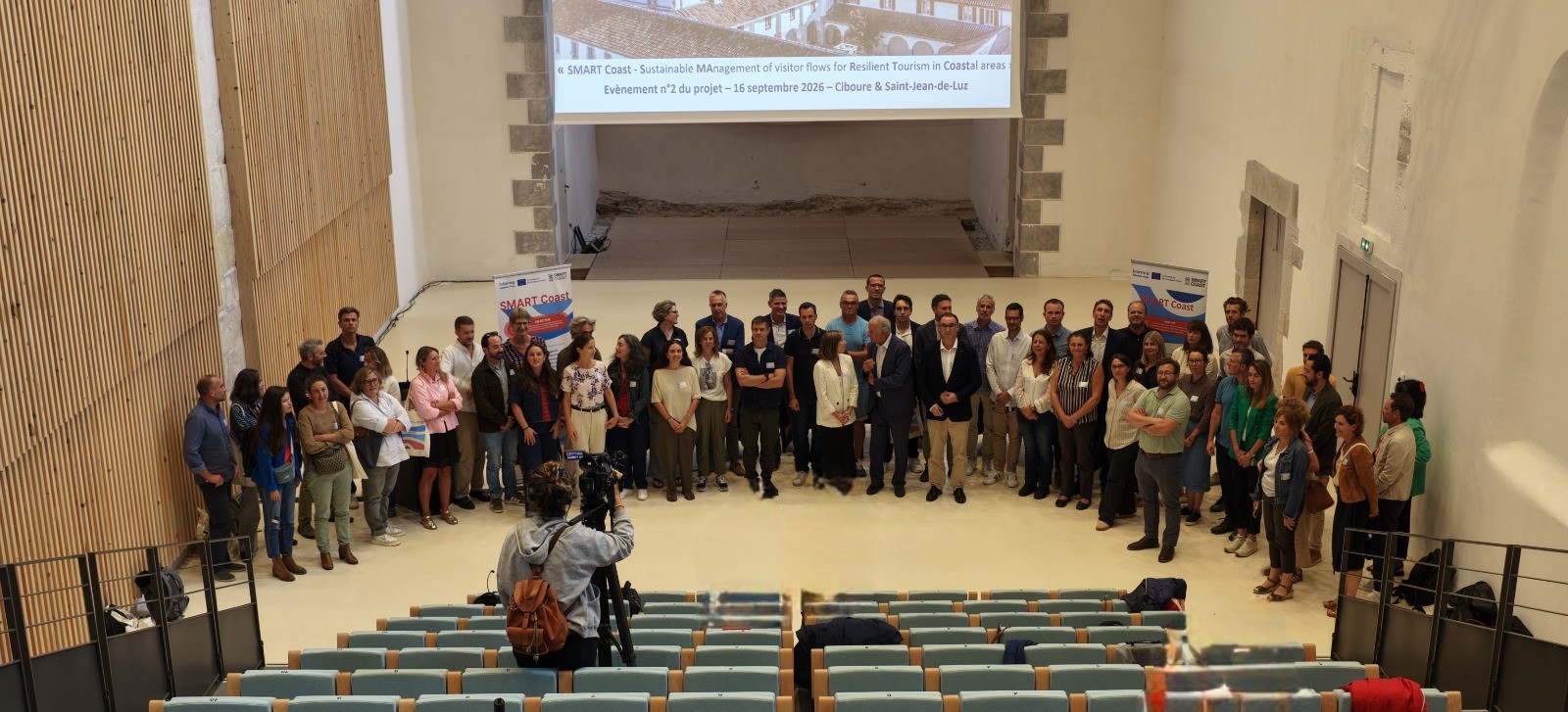
Project partners review progress in the first year of implementation and coordinate the next steps
SMART Coast partners gathered for the project’s second transnational event on 16 and 17 September 2026 in Ciboure and Saint-Jean-de-Luz, in the French Basque Country. The meeting provided an opportunity to review progress during the first year of implementation and coordinate the next steps of this transnational cooperation initiative, co-funded by the Interreg Atlantic Area programme.
Organised by GIP Littoral and the Communauté d’Agglomération Pays Basque, the event brought together more than 60 participants, including project partners, local authority representatives, tourism professionals and environmental associations from Spain, France, Ireland and Portugal.
Official welcome and project progress
The first day, held at CIAP Les Récollets in Ciboure, opened with an official welcome from the mayors of Ciboure and Saint-Jean-de-Luz, alongside representatives of the Communauté d’Agglomération Pays Basque and GIP Littoral.
The leads of the three work packages then presented progress over the past year. Fiona Scott-Hayward (MTU, Ireland) outlined the research on pilot actions and the development of the evaluation methodology. Isla Sadran (GIP Littoral, France) reported on the implementation of pilot actions across the project’s seven territories, while Jesús Collado Agudo (University of Cantabria, Spain) highlighted the main achievements in dissemination and communication.
The morning also featured a contribution from Mathieu Bergé, Regional Councillor responsible for European Territorial Cooperation in the Nouvelle-Aquitaine Region and a representative of the National Managing Authority for the Interreg Atlantic Area programme. He offered a policy perspective on the importance of transnational cooperation in addressing the challenges facing coastal tourism across the Atlantic Arc.
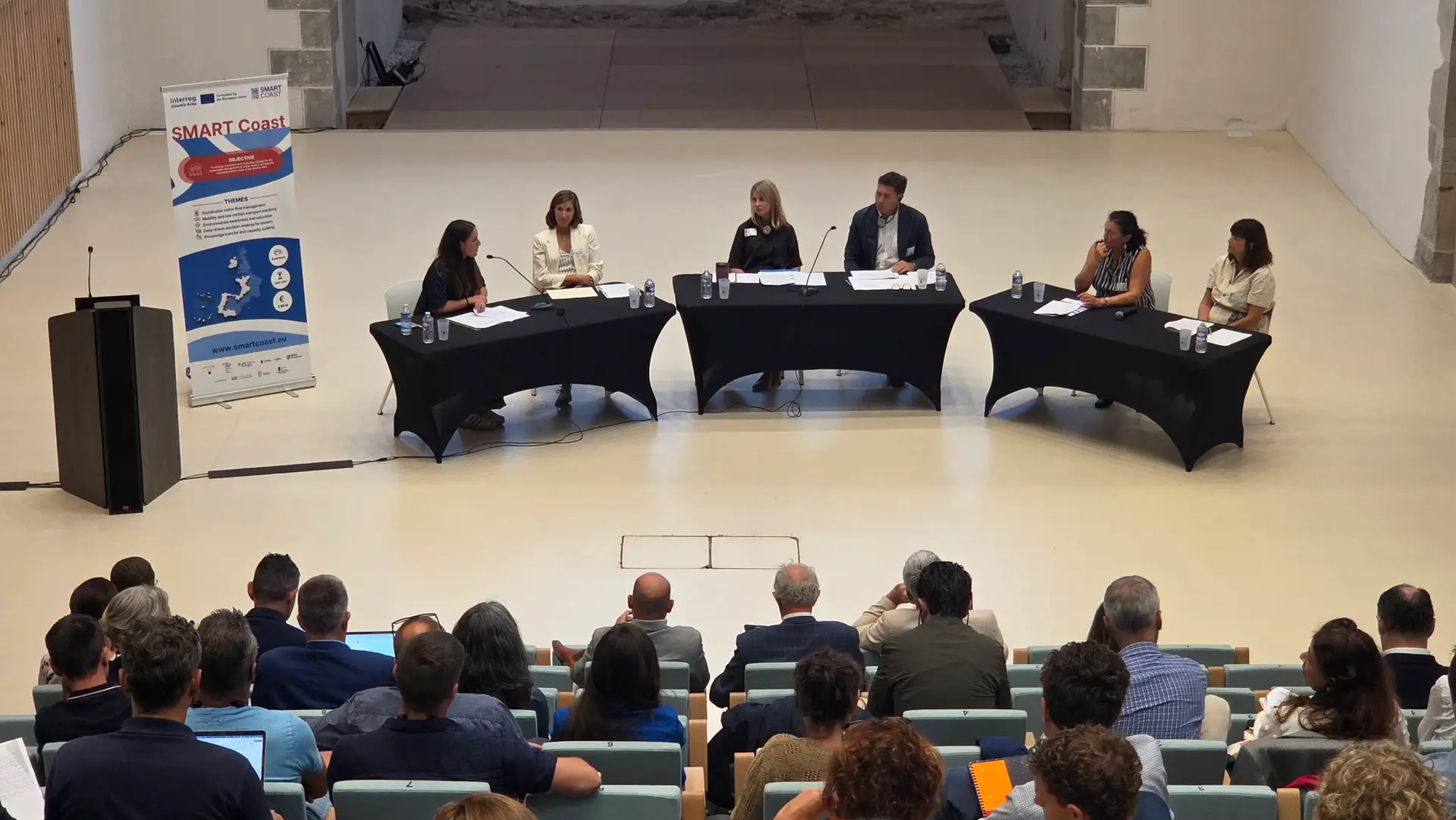
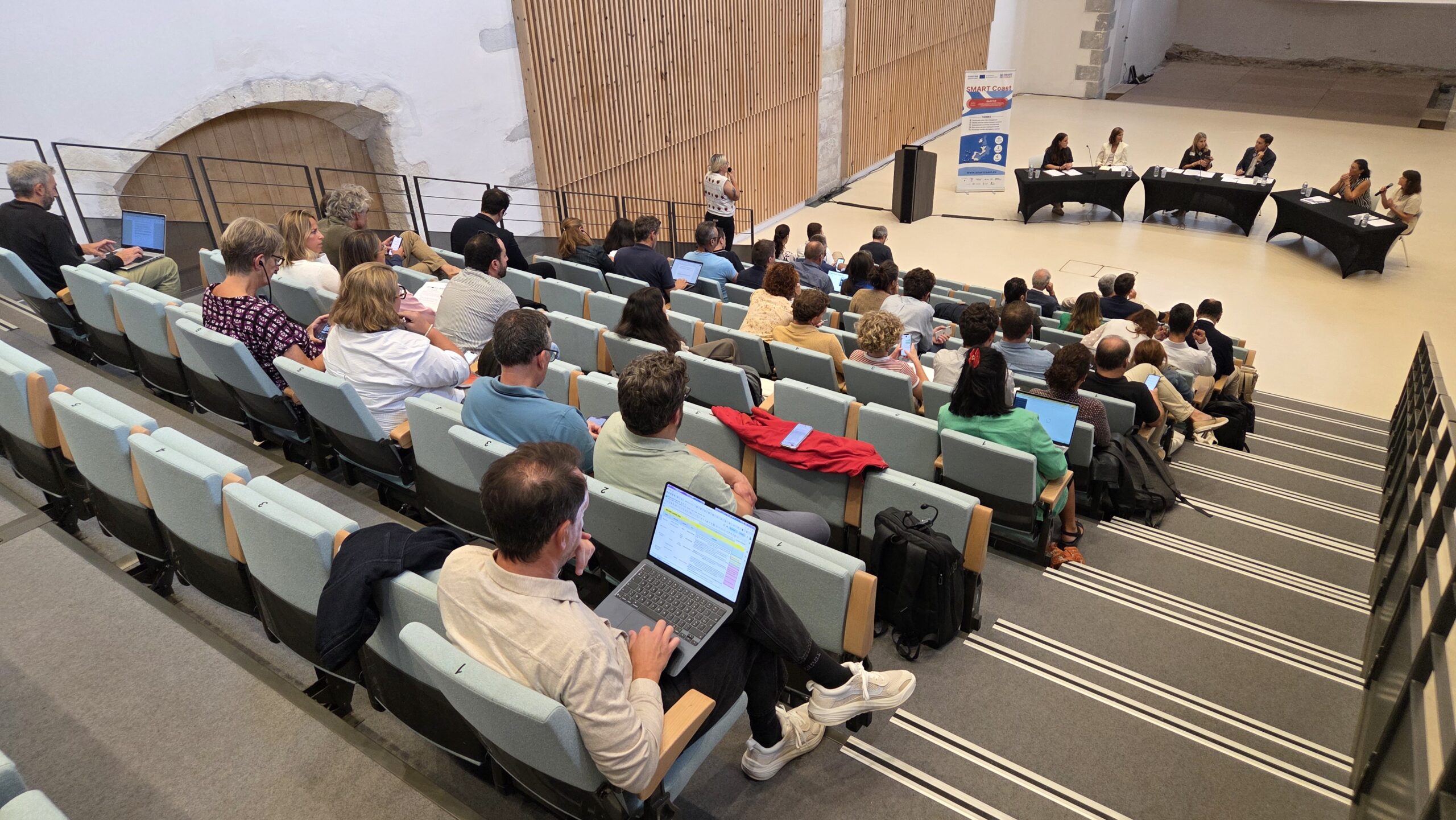
One of the highlights was the roundtable discussion “Managing visitor flows or changing behaviour?”, moderated by Isla Sadran. It brought together representatives from four Atlantic coastal areas: the Médoc Plein Sud Tourist Office (Gironde), the municipality of Plomeur (La Torche, Brittany), the Government of Cantabria’s European Projects Office (representing Piélagos) and the Maharees Conservation Association (County Kerry, Ireland). The discussion explored shared challenges, including reliance on private cars, seasonal peaks in visitor numbers, pressure on fragile natural areas and the need to involve local communities in sustainable management.
Visits to pilot sites on the Basque coast
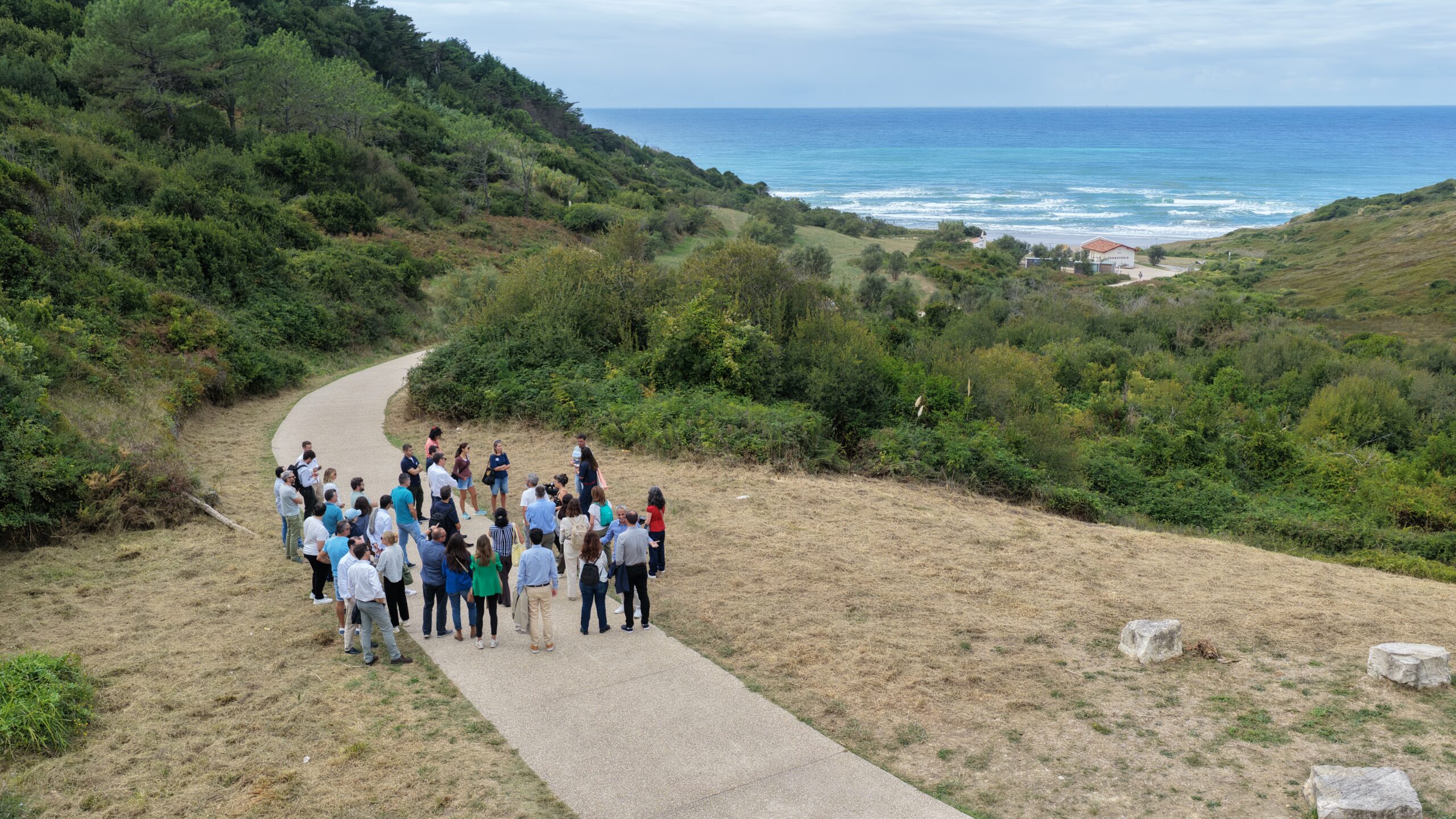
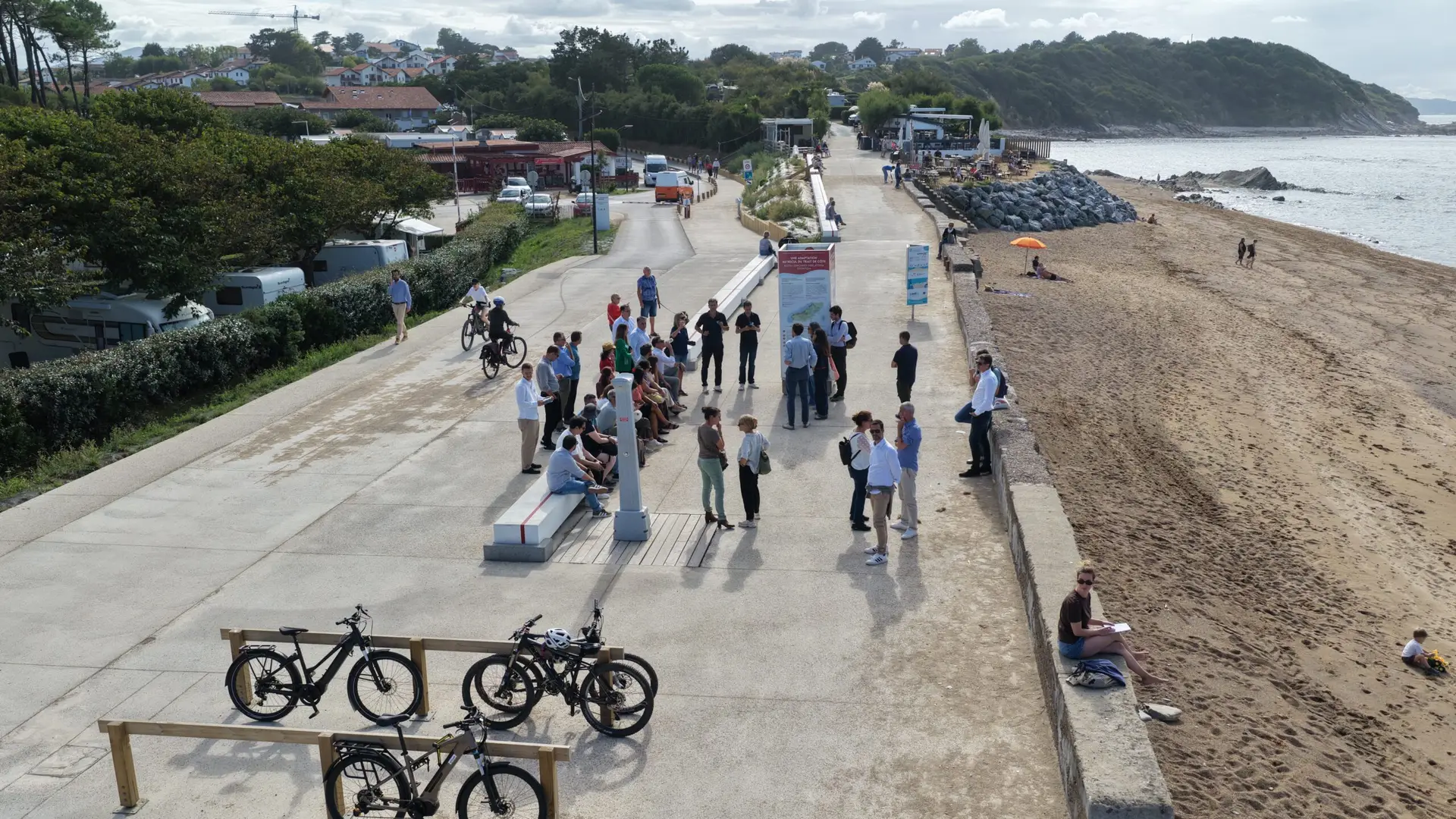
In the afternoon, participants took a guided tour of two pilot sites on the French Basque coast. At Erretegia beach, they saw a completed coastal restoration project led by the Pyrénées-Atlantiques Departmental Council. At Erromardie beach, the Communauté d’Agglomération Pays Basque presented its ongoing sustainable redevelopment project, which includes a SMART Coast pilot action focused on smart management of access and visitor flows. Both visits provided practical examples of how the project’s solutions translate into real decisions on managing coastal areas.
Collaborative workshops
The second day, held at the Tour Bordagain in Saint-Jean-de-Luz, focused on the consortium’s internal work. The morning centred on a participatory workshop in which participants rotated between discussion tables. Two tables reviewed progress on pilot actions across the different territories, exploring achievements, obstacles and shared solutions. The other two introduced the methodological tools developed under Work Package 1 (WP1) to guide the design and evaluation of the pilots.
The project’s next transnational event is planned for April 2027 in Ireland.